Monday, September 26, 2016

Discourse Communities

DISCOURSE COMMUNITIES! Woo. The party don’t start til discourse communities are brought in



(If you couldn’t tell, this is a very, very pained smile.)


Hey, its been a while since we’ve written a blog. I would say its good to be back but that would be a lie because I didn’t really miss it all that much. I never know what to write, especially when the topics are about genre or discourse communities. And it was even harder when I saw the article the blog was based on. I tried reading Swales but it was so hard to even pay attention. Did anyone else have a hard time reading this or was it just me? The first attempt at me reading it was basically just me making this face the entire time.


The sentences were so long and boring my mind started to drift from what he was actually talking about. Why do academic authors like this always feel the need to fluff up sentences to the point where I get lost and don’t even remember what the point is? Can’t they just get straight to the point? But after realizing I had no choice, I forced myself to read. And after reading the same paragraphs about 10 times, I guess I finally started to get what he was trying to say. Swales begins the article by introducing speech community; a community that shares the knowledge of rules for the conduct and interpretation of speech. Swales then talks about how a speech community is built through birth, accident, or adoption and then contrasts  this idea by introducing discourse community, which he says uses persuasion and training to recruit members.


He introduces the idea of discourse community by using six characteristics that each discourse community holds. The six characteristics he included are: 1) a discourse community has a broadly agreed set of common public goals. 2) A discourse community has mechanisms of intercommunication among its members. 3) A discourse community uses its participatory mechanisms primarily to provide information and feedback. 4) A discourse community utilizes and hence possesses one or more genres in the communicative furtherance of its aims. 5) In addition to owning genres, a discourse community has acquired some specific lexis. 6) A discourse community has a threshold level of members with a suitable degree of relevant content and discoursal expertise.
So the characteristics themselves are pretty self explanatory. But I’m gonna explain them anyways so I have more to talk about lol So, a discourse community have common goals, okay cool that’s number 1. Number 2, a discourse community has ways to communicate between the people who are part of it. Number 3, a discourse community uses its many ways of communication to provide information to its members. Number 4, a discourse community has many different genres tied to it. Number 5, a discourse community has specific language. And number 6, a discourse community has different levels of membership. Did anyone notice in the article that it says “individuals enter as apprentices and leave by death or in other less involuntary ways”? Leave by death? Kinda intense for  something like a discourse community haha but anyways, simplifying Swales characteristics helped me understand the concept of discourse communities a lot better. Hopefully my explanations helped anyone else struggling with this article!


I guess the best way to fully understand discourse communities to analyze one that I’m actually part of; College students. Our goal is basically just to pass all our classes with decent grades and hopefully graduate within 4 or 5 years. And also try not to cry too much about hard adulating is.  Or how much sleep we didn’t get. Or how much money we wish we had. Where was this going again? Oh yeah, discourse community. We also communicate through a bunch of different ways, whether its through class, social media, or any clubs we may be affiliated with. Talk about how much we hate waking up for 8ams or how certain exams make us feel like we dishonored our families is frequent. We provide information by sharing different information about classes we may have taken together or have taken before. We share thoughts on places like ratemyprofessor or facebook groups. Our language differs between specific groups, but they usually consist of slang and inappropriate language. As college students we have different “thresholds” through the number of years we’ve been here. We could be freshman, or we could be seniors.


Has this reached 750 words yet? Yes? Okay cool because I’m done. Til next time!

Sunday, September 11, 2016

Opinions!


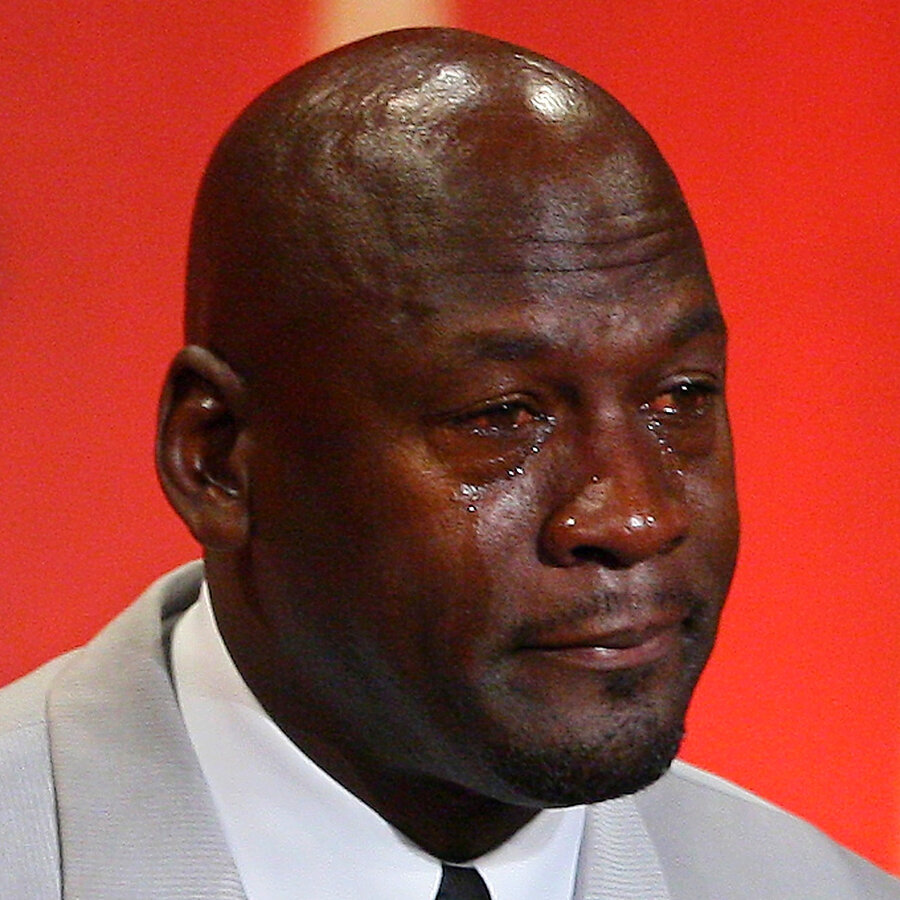
This is me, coming home on a Sunday realizing that I had forgotten to do my blog post. (This is also me during the Chargers game, but we don't talk about it). Actually I feel like this is me every time before I have to do something productive lol

Anyways, JSTOR articles. To be honest, I have never read a JSTOR Daily article. I haven't even heard of it before. But I am familiar with these type of sites because I read articles like these regularly. They're pretty interesting, and I feel like they keep me at least somewhat updated on major local and national news.  They’re cited, making them more credible than any average article or blog, and they have loads of fact based information that help support whatever argument they have. They contain a lot of logos appeals, but also a couple pathos. They feel a lot more formal and scholarly, almost like how writing a five paragraph essay feels like, but it leaves more room for using arguments based on your opinion.

Op-Ed articles on the other hand are pretty similar, but they do have many key differences. They contain a lot of hyperlinks that show where they got their information from, videos, and they also insert a lot of redirects to other similar articles. They are informative, and have many types of factual information, but they can also be written extremely opinionated, more so than JSTOR articles I feel like.  You also get to see other people’s comments, which I think is kind of important. Though they do incorporate many facts and credible information, they also like to use a lot of loaded language. For example, in “Trump’s history of corruption is mind-boggling. So why is Clinton supposedly the corrupt one?” , the author used many words like  “crazy”, “bigoted”, “corrupt”, and fraud”. All of these words are negative, and they appeal to the readers in a way that makes them associate the words with specific people and ideas.

Sometimes I come across certain articles that get me pretty heated. Some articles and their opinions got me feelin' some type of way like, yes, that is exactly how I feel. Thank you for putting my thoughts into coherent words and sentences. 


And there are others where I just feel like, nope, abort, I did not need to hear this today. Please remove this from my presence because it disgusts me.


But that’s what these are about. Different people voicing their opinions so that other people could read them and hopefully, respond to them. I like these types of articles because they always show a multitude of sides to an argument, even if I don’t agree with them.  These types of articles help shed light on current events or issues that I feel behind on and show me different view points I wouldn’t have thought of. They may be opinion based, but they also make sure to cite their sources and facts, that way they aren’t just throwing out a bunch of different statistics or false claims.

One thing I always do when I’m reading these type of articles is look at the comments. I like to see how people react to what is said and how people feel about the opinions said. Sometime they are good, and other times they really aren’t. I was reading the article “Criminal rape cases should not be on a ticking clock”, and the author was arguing that the statue of limitations on rape should be removed. According to the article, if stealing public funds is always prosecutable, then acts of sexual violence against women or children should be as well. And in my mind, this made sense. Though the authors idea did have its downsides and they didn’t tackle every aspect of the issue, I felt like it was a compelling argument.  But then I went down to the comments.  I read a post that said “If I am legitimately the victim of a crime, I am going to report it reasonably quickly. Rape victims think the world owes them the world. They are misguided.” 

My immediate reaction was


and after I read it again my reaction was


(ok not really but this is how I felt on the inside)

The comment was, in my opinion, extremely insensitive and the person who posted it was acting as if they knew what rape victims had been through. It was like he was invalidating how victims may feel and that rape victims should just deal with it. He didn’t even respond to the main idea of the article, which was the law about the statute of limitations, he just implied that the argument was irrelevant.

 But then again, that is their opinion, and this is mine.


Wednesday, September 7, 2016

Memes


Memes. I really never thought I’d ever have to write about them. Not gonna lie, a lot of them are pretty funny. I can probably spend hours on twitter laughing at a bunch of memes people have posted. And then after I can laugh (or cry) at myself at the amount of time I spent on them. But after reading Michele Knobel and Colin Lankshears article, not only did I feel a lot better about myself but I also felt like one of the few people who actually know what the definition of a meme is and how memes even became memes. Honestly, if I didn’t have this class I probably wouldn’t have even thought it was important (I’m not even sure I do now but at hey, least we don’t have to write an essay).  Anyways, I use memes a lot myself too.  

Whenever the professor says they drop the lowest test score


when chipotle tells me the guac is extra 

Or when someone agrees with you when you roast yourself (or when life just becomes too much for me to handle, which is basically the same thing but its ok, I’m ok)


I also never really thought about how or why memes became so popular. Who makes them? And how do they get so popular so quickly? Michele Knobel and Colin Lankshear define memes as “noticeable and often rapid uptake and spread of a particular idea in the form of written text, an image, a language ‘move’, or other piece or unit of cultural information” (1).  They talk about the three characteristics of memes; fidelity, fecundity, and longevity. These three characteristics outline how memorable memes are, how fast they spread, and how long it survives. A lot of the memes I see are found through many different social media outlets such as Twitter or Facebook. Sometimes they become so popular that I even have my mom sending me messages about how funny the harambe memes are (mom if youre reading this please, stop.) Before reading the article, I probably would’ve just defined a meme as a funny picture with a caption. And now, well, if I’m being honest I’ll probably still talk about it the same way as I did before. But at least I have something to awkwardly talk about to my mom when she asks me about what I learned in school today.

The Mr. krabs meme, for example, contains all of the characteristics. This meme speaks to me, and probably a bunch of other people, on a personal level because it accurately depicts how someone feels when something even slightly overwhelming happens to them. I use it all the time to convey how I feel during certain situations, whether it be confused, anxious, or if I feel like I’m being attacked when I’m really just trying to have a good time. It has been used repeatedly through social media and because it accurately illustrates the internal struggle that a person may feel at any given moment, it continues to be used even now. This single meme can be used for so many different scenarios.

When its summer and you finally check your bank account after 3 months  


When it’s the first day of class and the professor starts to lecture right after showing you the syllabus


When you just wake up from a nap and you feel like you’re in the fourth dimension


Memes, for some reason, have become a large part of social interaction. They convey thoughts, feelings, and reactions to other people in simple, but amusing ways. Memes have also become part of our culture. I feel like memes are a good way of understanding how people relate to one another and how we sympathize other people’s feelings. Whenever I text my friends and they send me a meme I always reply with “same” or “omg lol me too”. They allow strangers to connect with each other and start conversations comfortably. Because of memes, we have not only created a new form of communication, but also a form of amusement and humor that can be shared with anyone and everyone.  

Thirty years from now, I wonder how people will react to memes. Will they still relate to them? Or will they think they’re outdated and lame? Will they even still exist?